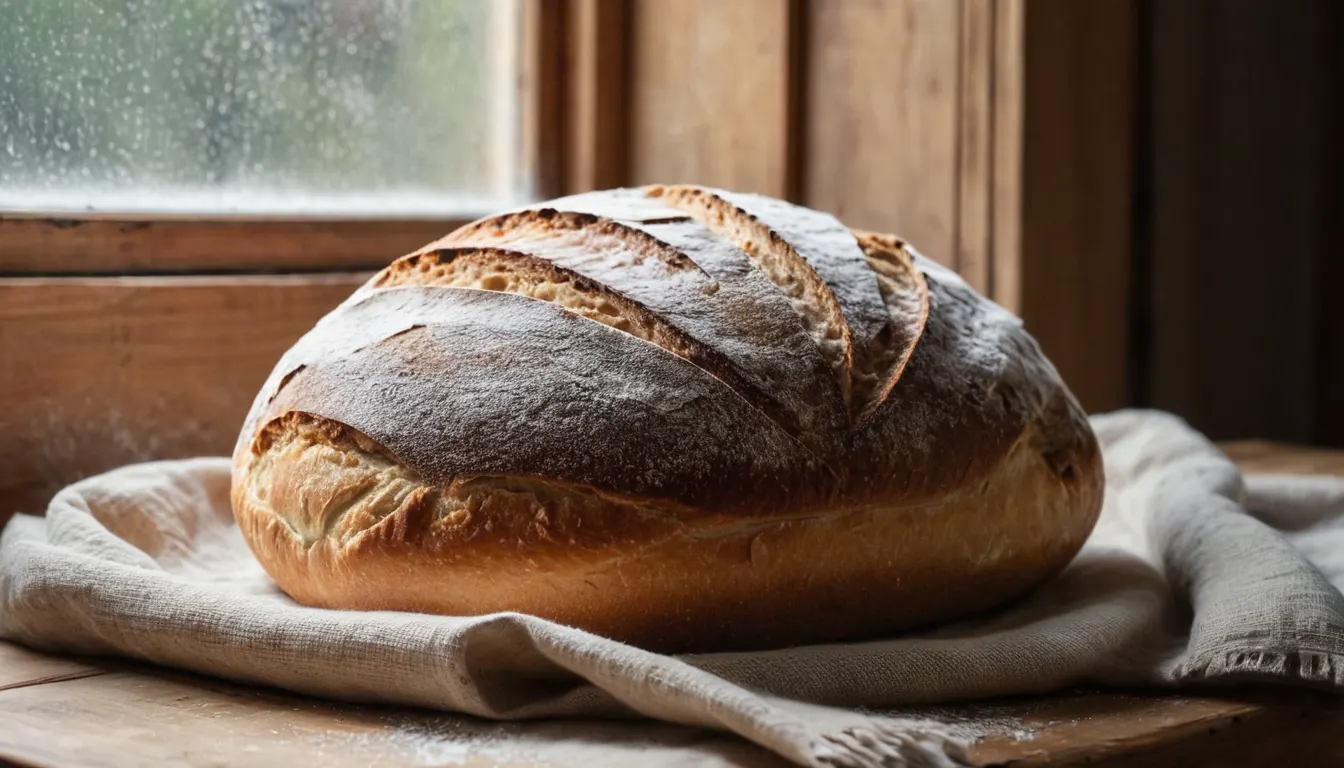
Where to start
If you have never baked sourdough, work through these in order. A new starter takes one to two weeks to become reliable, so begin it today and read the rest while it grows.
1. Make a starter
A day-by-day plan for raising a starter from flour and water, with what to expect and when to worry.
2. Feed and keep it
Feeding ratios, peak times, a fridge routine for weekly bakers and what to do with discard.
3. Learn the numbers
Baker's percentages explained, so any recipe can be scaled, compared and adjusted.
4. Bake a country loaf
The core recipe: 75% hydration, 20% levain, 2% salt, with a timeline from levain to slicing.
Recipes
Basic country loaf
An open-crumbed, crackly loaf baked in a Dutch oven.
Whole wheat and rye
A heartier loaf with 40% wholegrain flour and a little more water.
Sandwich tin loaf
Soft, sliceable sourdough baked in a loaf tin, enriched with a little butter.
Sourdough focaccia
A wet, olive-oil-rich dough that bakes in a tray with almost no shaping.
Discard recipes
Crackers and pancakes that use the starter you would otherwise throw away.
The core formula at a glance
Almost every recipe on this site is a variation on one simple formula. Flour is always 100%, and everything else is a percentage of the flour weight.
| Ingredient | Weight | Baker's % |
|---|---|---|
| Bread flour | 450 g | 90% |
| Whole wheat flour | 50 g | 10% |
| Water | 375 g | 75% |
| Levain (100% hydration) | 100 g | 20% |
| Salt | 10 g | 2% |
| Total dough | 985 g | 197% |
Change the percentages and you change the bread. More water opens the crumb but makes the dough harder to handle. More levain speeds fermentation. Salt stays close to 2% in nearly every lean loaf. The baker's percentage calculator turns any set of percentages into grams.
What you need
- A digital scale that reads in single grams. Cups and spoons are too variable for bread.
- A clear jar with a loose lid for the starter, so you can see it rise.
- A large bowl or straight-sided container for bulk fermentation.
- A Dutch oven or lidded casserole that can take 250°C (480°F), or a baking stone with a way to add steam.
- A banneton or a bowl lined with a floured tea towel, and a bench scraper.
- A thermometer helps: dough temperature predicts timing better than the clock.
How these recipes are written
Every recipe gives weights in grams, baker's percentages, temperatures in both °C and °F, and a time range rather than a single number. Fermentation depends on your starter and your kitchen temperature, so the ranges are guides. Learn the visual and touch cues in each recipe, and use the schedule planner to fit baking around your week. When a loaf disappoints, the troubleshooting guide works backwards from the crumb to the cause.
Do I have to make my own starter?
No. A friend's starter, or a dried starter from a reputable source, will get you baking sooner. Revive it with the feeding routine in the feeding guide.
Is sourdough just bread with a sour taste?
Not necessarily. Sourness depends on fermentation temperature, time and the balance of yeast and bacteria. A young, warm levain gives a mild loaf; a long, cool fermentation gives a tangier one.